
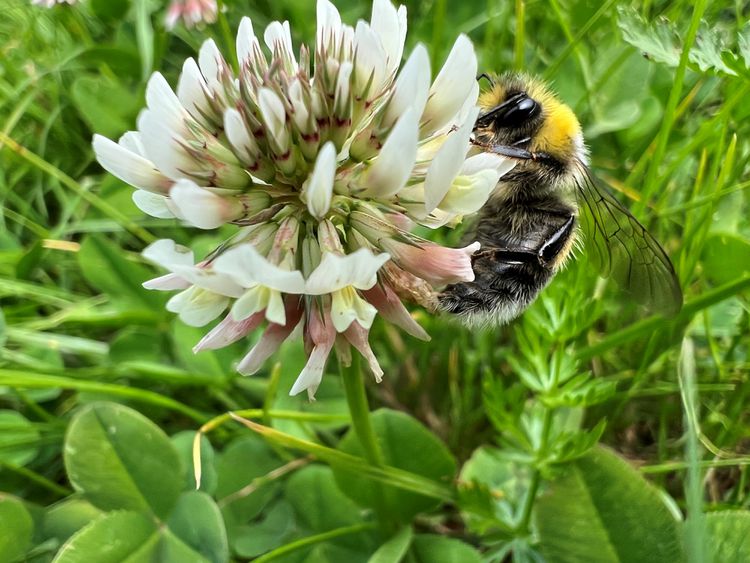
Flowering bee lawns are an exciting lawn alternative that combines low-growing flowers with grass seed. Traditional turf grass lawns come with serious costs to the environment (not to mention your time and bank account) by requiring frequent mowing, watering, herbicides, and fertilizer to thrive. It’s little wonder why some people are choosing to remove their turf grass lawns entirely and install meadowscapes, xeriscapes, or artificial turf instead. Ditching your lawn is a big step, however. Bee lawns provide an eco-friendly option for folks that aren’t quite ready to give up their grass.
Bee Lawn Benefits
Bee lawns are great for pollinators (hence their name). Bee lawns, originally developed by researchers at the University of Minnesota, combine white clover, shelf-heal, and creeping thyme flowers with fine fescue grass. They’ve been found to attract over 50 species of bees and support a higher diversity of bees than lawns with clover alone.
“There’s a lot of interest in helping pollinator communities through intentional planting of these flowers,” says Eric Watkins, a professor and turf grass specialist at the University of Minnesota who helped develop the bee lawn seed mix.
The benefits of bee lawns extend beyond pollinators, however. Bee lawns require fewer inputs (water, mowing, fertilizer, and pesticides) than traditional lawns. “You’re mowing less, you’re watering less, and you’re not applying fertilizers that have the potential to runoff into nearby bodies of water,” explains James Wolfin, a conservation specialist at Twin City Seed Company, a commercial seed company based in Minnesota.
For some people, the drought tolerance of bee lawns is even more important than the benefits to pollinators, notes Watkins. “People are really interested in growing grasses that don’t need to be watered as much or will do better during a drought.”
How to Create a Bee Lawn
It’s essential to follow some key steps when installing a bee lawn. Watkins stresses not to get too frustrated if you’re not successful on the first try, however. “Sometimes it’s just how it is, especially with something that’s newer.”
1. Check your local rules.
Before installing any lawn alternative, check your local rules. Many municipalities and homeowners associations (HOAs) restrict what you can do with your yard. You don’t want to spend the time and money installing a bee lawn only to find out it isn’t allowed in your area.
2. Purchase a seed mix suitable for your region.
Because bee lawn seed is such a new product, you might have trouble finding it at your local garden center. If it isn’t on their shelves yet, check with your local seed companies. They will likely have seed mixes tailored for your local conditions. If they don’t carry bee lawn seed, it can be purchased from online companies.
Regardless of where you source your seed, make sure it’s suitable for your region. For example, the bee lawn seed developed at the University of Minnesota uses grasses and flowers adapted to the northern United States so it wouldn’t be the best option for folks living in the south, explains Watkins. For southerners interested in bee lawns, the University of Mississippi is currently developing a bee lawn seed mix specifically adapted for the south, so sit tight and watch for future commercial offerings.
3. Plant at the right time.
Make sure to check the planting recommendations for the seed mix you purchase. Bee lawn seed that contains fine fescue grass needs to be planted in either the spring or fall when growing conditions are cool. Spring is a great time to plant if you want immediate results, says Wolfin, but it will require you to water the new lawn all summer. If you want a less burdensome experience, late fall is best for planting because you won’t have to water the seed as much the following spring.
4. Prepare and seed your site.
While you can remove existing turf before seeding a bee lawn, it’s not necessary in most situations. Instead, try overseeding which “is a great option because it’s so much easier both in the sense of the amount of effort you have to put in and making it cost effective,” says Wolfin. To overseed, simply mow your lawn as low as possible, rake the clippings, scatter the seed into your existing lawn, and then lightly rake the seed into the soil.
Wolfin also recommends taking a few additional steps that can save you money in the long run. If your site is heavily compacted from a lot of foot traffic, aerating the soil can help tremendously. Also test your soil to determine if any amendments are needed. “A $20 soil test is probably the best 20 bucks you could spend in landscaping,” says Wolfin.
5. Inform your neighbors.
Make sure to tell your neighbors what you’re doing and why. Bee lawns generate very few complaints, in part because they look similar to traditional lawns. However, adding a bee lawn sign to your yard can help clear up any potential confusion. When your neighbors understand what you’re doing, they may even want to install a bee lawn in their own yard.
Tips for Maintaining a Bee Lawn
While installing a bee lawn takes some planning, maintaining them is relatively simple. “One of the best parts about bee lawns is how easy they are to maintain relative to the typical turf grass lawn,” says Wolfin.
Bee lawns only need to be mowed two to four times per year because they grow slower than traditional lawns. They don’t require any fertilizer thanks to the clover adding nitrogen to the soil. And they require very little watering because the grass and plants used have deep root systems. Wolfin only recommends watering bee lawns once every three weeks under normal conditions. And of course, don’t apply herbicides to your bee lawn because “it will kill those lovely, delicate bee lawn flowers you worked so hard to get,” explains Wolfin. If you do find weeds, remove them by hand.
Overall, bee lawns are a lower-maintenance alternative to traditional lawns. They provide food for pollinators, reduce your environmental footprint, and add color to your yard. In fact, once you install one, you’ll wonder why you ever spent so much time and money tending your old turf grass lawn.